

As a master electrician with over 15 years in the field here in the Lakewood area, I’ve learned that the changing seasons bring their own unique electrical challenges. After a long, dry summer, that first scent of rain in the air is a welcome relief. But for your home's electrical system, it can be a moment of truth. Those months of relentless sun and salty marine air can take a toll on the exterior components that protect your home from the elements. When moisture is finally reintroduced, even small vulnerabilities can lead to flickering lights, tripped breakers, or worse.
That’s why my team and I always stress the importance of a pre-season check-up. Think of it as a first rain electrical checklist. Before the storm clouds gather in earnest, taking a few minutes to walk around your property can help you spot trouble before it starts. This simple visual electrical inspection can save you the headache of a power outage during the first downpour of the season. Let’s walk through what you should be looking for.
Common Signs and Symptoms
The components that bring power from the utility pole to your home are collectively known as the service entrance. This system is your home's first line of defense against the elements, and it’s where problems often begin. Here are the key warning signs to look for on the outside of your house:
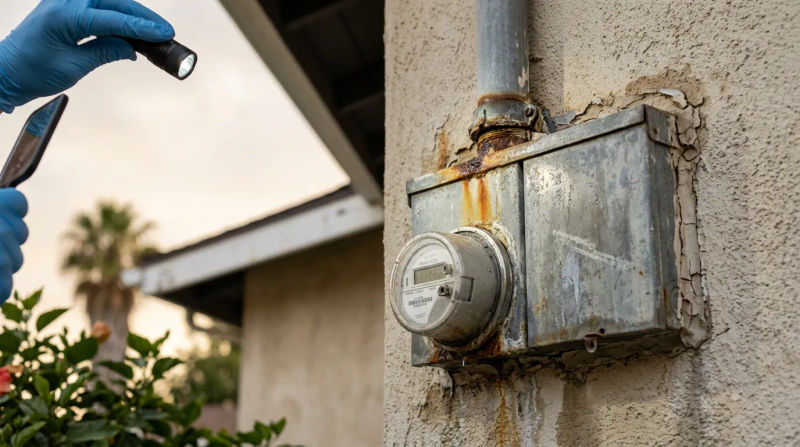
- Visible Rust or Corrosion: Take a close look at the metal box that holds your electric meter (the meter socket) and the metal pipe (conduit or mast) that runs up the side of your house. Here in Lakewood, the combination of salty air and sun is tough on metal. If you see significant rust, bubbling paint, or greenish-white corrosion, it’s a clear indicator that the protective coating has failed. These are tell-tale weatherhead corrosion signs that suggest moisture may already be finding its way inside.
- Cracked or Failing Seals: The sealant or caulk around your meter socket and where the service conduit enters the wall is critical. Over time, UV rays and temperature swings cause it to dry out, crack, and pull away from the wall. A compromised seal is an open invitation for rainwater to seep in behind the meter, creating a serious hazard.
- Flickering Lights During Windy Weather: If your lights dim or flicker when the wind picks up, it often points to a loose connection where the utility’s overhead wires connect to your house. This connection point, called the service drop, can become worn or damaged over time, and wind can cause the wires to move just enough to interrupt the flow of power.
- Breakers Tripping After It Rains: This is one of the most direct symptoms of a moisture-related problem. If you find yourself resetting a main breaker or multiple circuit breakers only after it has rained, it’s a strong meter socket moisture warning. Water is getting into the system somewhere - likely the meter base or service mast - and causing a short circuit.
- Water Stains on the Wall Around Your Indoor Panel: This is a sneaky one. Water that enters through a faulty weatherhead (the cap at the very top of the service mast) can travel down the inside of the conduit. It can bypass the meter socket entirely and drip out right where the wires enter your main electrical panel, often leaving stains on the drywall below or causing rust on the panel itself.
- Damaged or Frayed Overhead Wires: Look up at the thick, black cables running from the utility pole to your home. Are they frayed? Is the insulation cracked or peeling? Are tree branches rubbing against them? Any visible damage to these cables compromises their weather resistance and stability.
- Buzzing or Sizzling Sounds: Any audible buzzing, humming, or sizzling from your meter box or service mast is an emergency. This sound indicates electrical arcing, where electricity is jumping across a gap, often due to moisture and corrosion. This creates intense heat and is a significant fire risk.
What Causes This Problem
Understanding why these issues happen can help you appreciate the importance of addressing them. It’s rarely a single event but rather a combination of factors that build up over time.
First, our local environment plays a huge role. The long, dry season allows seals to shrink and crack. The salty marine air relentlessly works to corrode any exposed metal components. When the first rains arrive, that moisture finds all the tiny weak points created during the summer. Water and electricity are a dangerous mix, and these vulnerabilities can quickly lead to short circuits, arcing, and overheating.
Second, the age of the home is a major factor. In neighborhoods with older housing stock, like the beautiful pre-1940s homes you might find in historic districts, the original service entrance equipment is well past its expected lifespan. Materials like galvanized steel conduit, which was common in Craftsman and Victorian-era homes, can rust from the inside out after 80+ years. The original seals and fittings were simply not designed to last this long, making these properties particularly susceptible to moisture intrusion.
Finally, there's physical damage. Overhanging tree limbs scraping against the service drop during high winds can wear away the cable's protective insulation. A previous, improper repair might have used the wrong type of sealant. Even something as simple as leaning a ladder against the service mast can damage it. Water is opportunistic; it will exploit any crack, gap, or point of failure to get inside.
When to Call a Professional
While I encourage every homeowner to perform this visual first rain electrical checklist, it's crucial to know where the DIY-friendly zone ends. When it comes to your home's service entrance, that line is very clear.
For your safety, do not touch, open, or attempt to repair any part of the meter socket, service mast, weatherhead, or the overhead service wires. This equipment carries high-voltage power directly from the utility grid before it even reaches your main breaker. It is always energized and poses a lethal risk. Tampering with the meter is also illegal and can result in heavy fines from the utility company.
Your role is to be an observant detective. Use the checklist above to inspect your system from a safe distance on the ground. If you spot any of the warning signs - especially rust, cracked seals, flickering lights, or post-rain breaker trips - it's time to call for an expert opinion. These are not issues that will resolve themselves; they will only worsen with each passing storm.
A qualified professional can safely assess the condition of your equipment. They have the training and tools to test connections, identify the exact point of water entry, and determine the best course of action. This might involve simply cleaning connections and applying new, high-grade sealant, or it could require replacing a rusted meter socket or a damaged weatherhead.
Conclusion
Your home’s electrical service entrance works silently in the background, 24/7, to keep your life powered. Taking a proactive approach to its maintenance, especially before the rainy season begins, is one of the smartest investments you can make in your home's safety and reliability. A quick walk-around is all it takes to spot the early warnings of corrosion and water intrusion.
Don't wait for a flickering light to become a full-blown outage in the middle of a storm. By being vigilant now, you can ensure your system is sealed, safe, and ready for whatever the coming winter has in store. Peace of mind is well worth the effort.
If you notice any of these signs, contact a local Electrical professional for an inspection.