

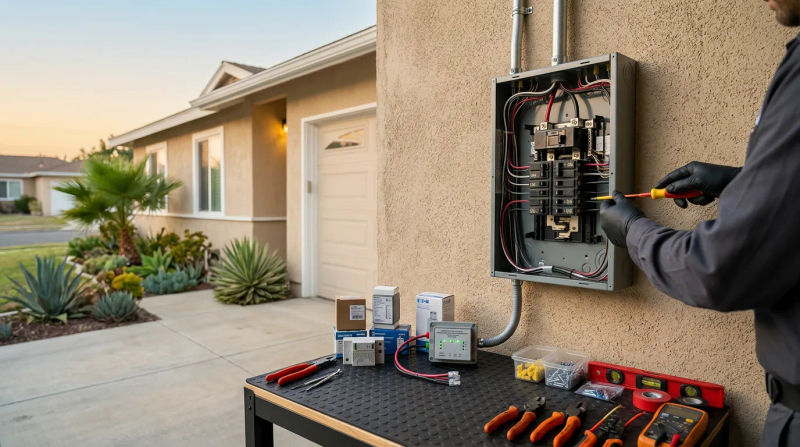
As a Master Electrician with over 15 years of experience in the Lakewood area, I know that for most homeowners, the first question about any electrical project is, "What's it going to cost?" It's a fair question, and when it comes to protecting your home's valuable electronics, you deserve a transparent answer. Especially now, as we head into September and the peak of fire season, the risk of power surges from Santa Ana wind events and utility grid instability is at its highest.
Power surges aren't just from lightning. Here in Southern California, a more common cause is the fluctuation that happens when power is shut off and then rapidly restored by the utility company - a frequent occurrence during high fire-risk days. These surges can silently degrade or instantly destroy everything from your new smart TV and computer to your refrigerator and HVAC system. This guide will break down the realistic whole-home surge protector cost so you can budget effectively and protect your investments.
Average Costs in Lakewood
For a professional installation of a quality whole-home surge protection device (SPD) in the Lakewood area, homeowners can typically expect to invest between $550 and $950. This range covers both the device itself and the labor from a licensed electrician.
Let's break that down:
- Surge Protection Device (SPD): The hardware itself usually costs between $150 and $400. The price depends on the brand, features, and its kA rating (more on that later).
- Professional Labor: Installation typically takes our technicians between one to three hours. The labor portion of the surge protector installation cost near Lakewood CA generally falls between $400 and $600, factoring in service call fees, a thorough inspection of your panel, and ensuring a proper, safe connection.
This price range primarily reflects the installation of a Type 2 device, which is the most common for residential applications. It's installed inside your main electrical panel on a dedicated two-pole breaker. However, understanding the different types is key to budgeting.
When it comes to Type 1 vs Type 2 surge protector pricing Lakewood, the main difference is location and complexity. A Type 1 device is installed on the outside of your home, between the utility meter and your main panel. It offers a first line of defense against external surges but often involves more complex wiring and sometimes requires coordination with the utility company, making the installation more expensive.
Factors That Affect Price
The $550-$950 range is a great starting point, but several factors can shift the final price. As an electrician, these are the variables I assess on every job.
1. The Type and Rating of the Surge Protector
- kA Rating: This is a crucial specification. The kA (kiloampere) rating tells you the maximum amount of surge current the device can absorb in a single event. A higher rating means more robust protection and a longer service life, but also a higher device cost. The common question we get is, how many kA surge protector do I need California? For a standard single-family home in Lakewood, a device rated between 50kA and 100kA is typically more than sufficient to handle surges from grid fluctuations.
- Brand and Features: Reputable brands like Eaton, Siemens, or Square D offer excellent products with strong warranties. Some models also include LED indicator lights that show you the device is still active and protecting your home, which adds to the cost but also provides peace of mind.
2. The Age and Condition of Your Electrical Panel
This is the single biggest factor that can affect installation cost, especially in Lakewood. Many homes in our area were built in the post-WWII boom of the 1940s and 1950s. While these homes have incredible character, their electrical systems often present challenges.
- Panel Space: A Type 2 surge protector requires two empty slots in your breaker panel. Many older panels are completely full. If there's no room, we may need to install a small sub-panel next to your main one, which can add several hundred dollars to the project cost.
- Outdated or Unsafe Panels: If your home still has a Federal Pacific, Zinsco, or Sylvania panel, we often cannot safely install a surge protector. These panels have known safety issues and are often uninsurable. In this case, a full panel upgrade would be required before any other work could be done, which is a much larger project.
- Corrosion: Our coastal air can accelerate corrosion on the metal bus bars inside your electrical panel. If the connection points are corroded, it's not safe to add a new circuit. Our technicians always clean and prepare the connection point, but severe corrosion might necessitate more significant repairs.
3. Grounding System Integrity
A surge protector works by diverting excess voltage safely to the ground. If your home's grounding system is inadequate - a common issue in older homes - the surge protector can't do its job. Part of our standardized process is to inspect the grounding electrode conductor. If it's missing, damaged, or not up to current code, it will need to be repaired or replaced for the SPD to be effective, adding to the overall cost.
How to Get the Best Value
Getting the best value isn't about finding the cheapest price; it's about getting effective, long-lasting protection. Here are a few tips:
- Bundle Electrical Work: If you're already planning to have an electrician out to install a new EV charger or add outlets, bundling the surge protector installation into the same visit can save you money on a separate service call fee.
- Focus on a Quality Installation: The performance of your SPD is 100% dependent on the quality of the installation. The wires must be as short and straight as possible, and the connections must be torqued to specification. A shoddy installation can render the device useless or even create a fire hazard. A trained, professional crew ensures it's done right.
- Choose the Right Device for Your Panel: Our technicians are trained to match the surge protection device to your specific panel brand and electrical load. This ensures a proper fit, optimal performance, and maintains the panel’s UL listing.
Questions to Ask Your Contractor
Before you hire an electrician, arm yourself with the right questions to ensure you're getting a qualified professional who will do the job safely.
- Are you licensed and insured to perform electrical work in California?
- Will you be pulling a permit for this installation if required by the city?
- What kA rating do you recommend for my home, and why?
- Does your estimate include a full inspection of my panel and grounding system?
- What is the warranty on the device and your workmanship?
- Given that my home was built in the 1950s, do you see any potential complications with my panel?
An experienced electrician should be able to answer these questions confidently and clearly.
Protecting your home from power surges is a proactive step that saves you from the cost and headache of replacing expensive electronics and appliances. While the upfront investment is a consideration, it pales in comparison to the potential losses from a single significant surge event, especially during our unpredictable fire season.
For a personalized estimate and a thorough assessment of your home's electrical system in Lakewood, contact JC Electric for a free consultation.